
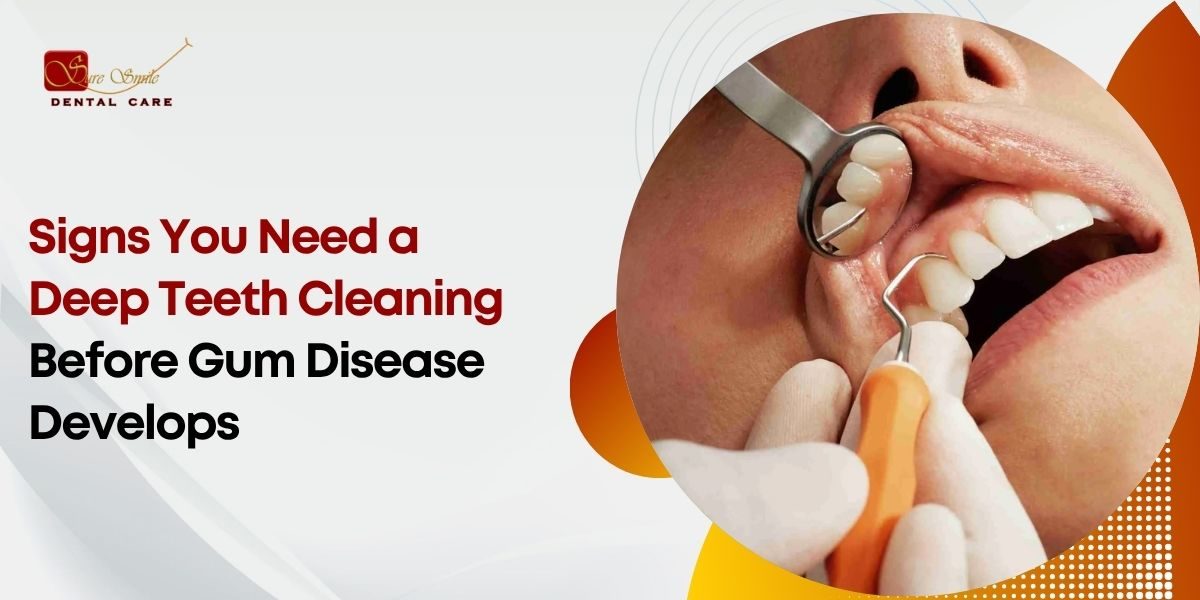
Bleeding gums after brushing. Bad breath that keeps returning. A rough layer near the gumline that does not come off even after brushing. These changes are easy to ignore, especially when there is no pain. Gum problems often begin quietly.
A deep teeth cleaning may be recommended when plaque and hardened tartar have moved below the gumline and routine cleaning is no longer enough. At Sure Smile Dental Care, the focus is on identifying these changes early, before inflammation progresses into more serious periodontal problems.
Not everyone with bleeding gums needs the same treatment. Some people may only need better home care and a professional teeth cleaning, while others may require treatment below the gumline after a complete dental evaluation.
What Is a Deep Teeth Cleaning?
A deep teeth cleaning removes plaque, tartar, and bacterial deposits from areas around and below the gumline.
It is different from routine cleaning, which mainly focuses on deposits around the visible tooth surfaces and gumline. Deeper treatment is used when deposits collect around the roots or inside periodontal pockets.
It commonly involves scaling and root planing. Scaling removes deposits from the teeth and beneath the gums, while root planing cleans and smooths affected root surfaces. The American Dental Association describes this treatment as cleaning below the gumline when gum disease has created spaces where plaque collects.
This does not mean everyone with tartar needs a dental deep cleaning procedure. Your dentist first examines the gums and checks whether deeper treatment is actually necessary.
What Are the Early Signs You May Need Deep Cleaning?
You do not need to wait for severe pain before paying attention to your gums. These changes may indicate buildup in areas that are difficult to clean at home.
1. Your Gums Bleed Frequently
Gums that bleed repeatedly while brushing or flossing should not be ignored.
Plaque sitting along the gumline can irritate gum tissue and cause inflammation. If the problem is still mild, improved oral hygiene and routine cleaning may be enough. If tartar has moved below the gumline, your dentist may recommend deep teeth cleaning after examining the area.
Frequent bleeding can also occur with swollen or tender gums. Read Sure Smile Dental Care’s guide on gum swelling treatment in Horamavu to understand when these changes need professional attention. SureSmile also identifies persistent bleeding and swelling as symptoms that deserve evaluation.
2. Your Gums Look Red, Puffy, or Tender
Healthy gums should not remain red, swollen, or sensitive for long periods.
These changes are commonly associated with gingivitis, the earliest stage of gum disease. Gingivitis can cause redness, swelling, and bleeding, and early treatment is important before the condition progresses.
A professional teeth cleaning may help when the problem is limited to surface plaque and tartar. Persistent swelling, however, needs a closer dental assessment.
Home remedies may temporarily soothe the gums, but they cannot provide the same tartar removal that professional dental instruments can perform.
3. You Can Feel Hard Buildup Around Your Teeth
Do some areas of your teeth feel rough even immediately after brushing? That rough layer may be hardened tartar.
Plaque starts as a sticky film. When it is not removed thoroughly, it can harden and become difficult to remove with brushing and flossing alone.
A dentist can choose the right plaque removal treatment based on where the deposits are located. Surface buildup may only need routine cleaning. Deposits beneath the gums may require a deep teeth cleaning.
4. Bad Breath Keeps Coming Back
Food, dry mouth, and tongue coating can cause bad breath. But if it returns soon after brushing, bacteria around the gums may be contributing. Plaque and tartar can collect in areas a toothbrush cannot reach easily.
Mouthwash may temporarily freshen your breath, but it cannot remove hardened deposits.
Your dentist can identify the source of the problem and determine whether routine cleaning or deep cleaning for gums is more appropriate.
Persistent bad breath is also listed by SureSmile among symptoms that can occur with gum problems, especially when inflammation or infection is present.
5. Your Gums Are Pulling Away From Your Teeth
Do your teeth look longer than they used to?
This can happen when gums recede. Recession can have several causes, including aggressive brushing, tooth position, and periodontal problems.
When recession occurs with bleeding, swelling, or deeper gum pockets, a dental evaluation becomes important.
If bacterial deposits are present around the root surfaces, scaling and root planing may be recommended to clean areas you cannot reach effectively at home. Periodontal treatment focuses on removing deposits beneath the gumline and cleaning affected root surfaces.
6. Food Keeps Getting Trapped Near the Gums
Repeated food trapping in the same area deserves attention. Changes in gum shape or periodontal pockets can create spaces where food and plaque collect and become harder to maintain at home.
A dentist can examine the site and determine whether you need a routine plaque removal treatment or more thorough cleaning below the gums.
Do not assume that repeatedly flossing the area is enough if food keeps returning to exactly the same spot. The underlying reason should also be checked.
7. Your Dentist Finds Deeper Gum Pockets
This is one sign you cannot identify accurately at home.
During a gum evaluation, your dentist may measure the space between the teeth and gums. When inflammation progresses, these spaces can deepen and become harder to clean.
If deeper pockets contain plaque or calculus, deep cleaning for gums may be needed. The ADA explains that plaque can become trapped inside periodontal pockets where regular brushing cannot effectively remove it.
This is why routine dental checkups matter even when you feel fine.
For more information on how gum disease progresses, read Sure Smile Dental Care’s guide to gum disease treatment. The clinic emphasizes detailed diagnosis and early treatment before gum problems become more difficult to manage.
What Happens During a Dental Deep Cleaning Procedure?
Before treatment, the dentist examines the teeth and gums and may take X-rays when needed.
During the dental deep cleaning procedure, plaque and tartar are removed from above and below the gumline, and affected root surfaces are cleaned.
Local anaesthesia may be used for comfort. Depending on the condition of the gums, treatment may be completed in one appointment or divided between different areas of the mouth. The ADA notes that local anaesthetic may be used and that treatment can sometimes require more than one visit.
The exact approach depends on how much buildup is present and which parts of the mouth are affected.
Is Deep Cleaning the Same as Regular Cleaning?
No.
Routine cleaning is preventive. It helps control plaque and tartar before they create deeper gum problems.
A deep teeth cleaning is more targeted. It reaches beneath the gumline when deposits or periodontal pockets cannot be managed adequately with routine cleaning.
Routine tartar removal may be enough for someone with healthy gum attachment and surface buildup. Patients with disease below the gumline may need deeper treatment.
The difference is not about which cleaning is better.
It is about which treatment your gums actually need.
That is why examination should always come first.
Can Deep Cleaning Help Stop Gum Disease From Getting Worse?
Yes, when a dentist identifies periodontal deposits or disease that requires treatment below the gumline.
The purpose of deep teeth cleaning is to remove bacterial buildup that continues irritating the gums and create a healthier environment for healing. Nonsurgical periodontal treatment is commonly used as an initial approach when periodontitis requires cleaning beneath the gums.
But treatment at the clinic is only one part of protecting your gums.
You should also:
- Brush twice daily with fluoride toothpaste.
- Clean between your teeth every day.
- Follow the brushing and flossing technique recommended by your dentist.
- Avoid smoking and tobacco use.
- Attend follow-up visits as advised.
Good home care helps reduce future plaque buildup.
What Happens If You Ignore the Warning Signs?
Early gum inflammation may seem minor, but persistent buildup can allow the problem to progress. You may notice more bleeding, bad breath, recession, deeper pockets, or changes in tooth stability.
Untreated periodontal disease can eventually damage the tissues and bone that support the teeth.
This is why deep teeth cleaning should be considered when clinical signs show that routine care is no longer enough, rather than waiting until gum problems become severe.
Early care is often easier than trying to control advanced periodontal problems later.
Why Choose Sure Smile Dental Care for Gum Care?
Gum treatment should begin with an accurate diagnosis, not a one-size-fits-all recommendation.
Sure Smile Dental Care provides dental checkups, cleanings, preventive care, oral health screening, and treatment for common gum concerns. Its general dentistry approach focuses on identifying problems early and creating treatment plans based on each patient’s oral health needs.
The team evaluates your symptoms and recommends care according to the level of plaque, tartar, and periodontal involvement.
If you only need routine cleaning, treatment does not need to be more complicated.
If deposits beneath the gums require a deep teeth cleaning, the treatment plan can be explained clearly before care begins.
This approach helps address gum problems at the right stage while protecting long-term oral health.
Wrapping Up
Bleeding gums, recurring swelling, stubborn tartar, persistent bad breath, gum recession, and deeper periodontal pockets are signs worth taking seriously.
They do not automatically mean you need a deep teeth cleaning.
They mean your gums should be professionally evaluated.
An early assessment can determine whether you need preventive care, professional teeth cleaning, or more thorough periodontal treatment. When deeper deposits are present, timely care can help control inflammation before greater damage occurs.
If your gums have started bleeding, swelling, or feeling different, do not wait for pain.
FAQs
1. How do I know if I need deep cleaning instead of regular cleaning?
A dentist needs to examine your gums first. Persistent bleeding, tartar below the gumline, recession, or deeper periodontal pockets may indicate that more thorough cleaning is required.
2. Is deep teeth cleaning painful?
Comfort varies depending on gum sensitivity and the amount of buildup. Local anaesthesia can be used when necessary, and temporary tenderness or sensitivity may occur afterward.
3. How long does deep cleaning for gums take?
The time depends on how many areas need treatment and the amount of buildup present. Some patients need one visit, while others may need treatment divided into multiple appointments.
4. Can tartar be removed by brushing harder?
No. Once plaque hardens into tartar, brushing will not remove it effectively. Dental instruments are needed for proper tartar removal.
5. How can I keep my gums healthy after treatment?
Brush twice daily, clean between your teeth every day, follow your dentist’s home-care advice, and attend recommended follow-up appointments.