
Most people don’t have a cavity problem. They have a technique problem.
They brush twice a day. They even floss occasionally. And they still end up with plaque buildup, sensitive teeth, or a surprise cavity at their next checkup. The issue usually isn’t effort. It’s the details — timing, angle, pressure, and consistency.
Get those right, and you can keep teeth healthy at home.
Why the Basics Matter More Than the Gadgets
Electric toothbrushes, whitening kits, and specialty rinses all have their place. But none of them fix a routine built on the wrong fundamentals. Dentists see this constantly. For instance, patients who own every product on the market but still brush too fast, at the wrong angle, or skip the one step that actually protects the gumline.
Therefore, getting the basics right is what helps you keep teeth healthy at home, not the price tag on your toothbrush.
Morning and Night: The Core Brushing Routine
Brush twice a day, for two full minutes each time. Most people brush for closer to 45 seconds and think they’ve covered everything. But you can throw on a quick phone timer to close that gap right away.
Hold the brush at a 45-degree angle against the gumline, not flat against the tooth surface. Use small, gentle circular motions rather than long horizontal scrubbing strokes. Scrubbing feels thorough. But it actually wears down enamel and can push the gumline back over time, which is one of the more common causes dentists see behind tooth sensitivity.
Use a soft-bristled brush, and replace it every three to four months, or sooner if the bristles start splaying outward. A worn brush cleans far less effectively than most people assume.
Finally, finish with a light pass over the tongue. A build-up of bacteria on the tongue surface contributes to bad breath and can reintroduce bacteria to freshly cleaned teeth.
Flossing: The Step Most People Skip or Rush
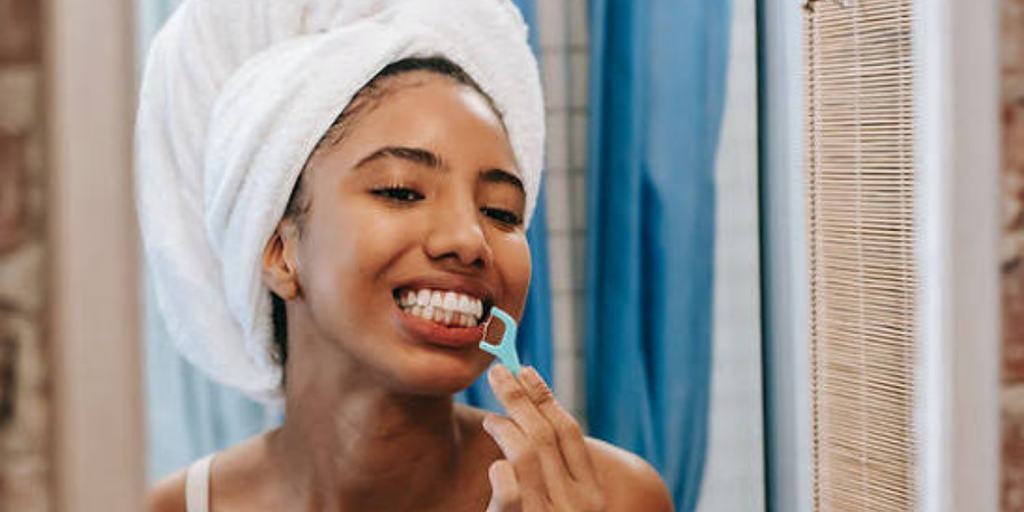
Interdental cleaning — floss, floss picks, or a water flosser — reaches roughly a third of each tooth’s surface that a brush physically cannot touch. Skipping it consistently is one of the fastest routes to gum inflammation and eventually gum disease.
Do it once daily, ideally before bed. Curve the floss around each tooth in a “C” shape and slide it gently below the gumline, rather than snapping it. That snapping motion is uncomfortable and can injure the gum tissue.
How to Prevent Cavities Naturally Between Checkups
Cavity prevention has less to do with how much sugar you eat and more to do with how often your teeth are exposed to it. Every time you eat something sugary or starchy, your mouth’s bacteria produce acid for roughly 20 to 30 minutes afterward. Therefore, five small snacks spread across the day create five separate acid attacks. One dessert after dinner creates just one.
A few habits genuinely help you prevent cavities naturally:
- Rinse with water after eating if you can’t brush right away.
- Chew xylitol-based gum between meals. It reduces the bacteria most responsible for cavities.
- Favor fluoride toothpaste, since fluoride actively helps remineralize weak spots in enamel before they turn into a full cavity.
- Cut down on grazing throughout the day, even on “healthy” snacks like dried fruit, which is sticky and sugar-dense.
Left unaddressed, a small cavity doesn’t stay small. What starts as a minor weak spot can progress to something far more involved, which is exactly the pattern covered in what happens if you ignore a small cavity.
The Timing Mistake Almost Everyone Makes
Never brush immediately after consuming something acidic — citrus fruit, soda, wine, even coffee. Acid temporarily softens the enamel surface, and brushing during that window actually brushes away tiny amounts of that softened enamel. Wait about 30 to 60 minutes first. However, rinsing with plain water in the meantime helps neutralize the acid without the abrasion.
This single timing fix prevents more long-term enamel wear and costs nothing to build into a routine.
Small Habits That Add Up
A handful of everyday choices quietly work against a good routine. For example, chewing ice, using teeth as a bottle opener, brushing too hard, or nail-biting under stress. None of these feel like “damage” in the moment. Over months and years, they add up. A closer look at ten daily habits that damage your teeth covers which everyday behaviors dentists flag most often.
Building genuinely healthy teeth habits means paying attention to these small moments, not just the two minutes spent at the sink.

Where Home Care Reaches Its Limit
Teeth cleaning at home, done well, removes plaque before it hardens. But once plaque mineralizes into tartar, or calculus, no amount of brushing or flossing removes it. Only a professional cleaning can. That’s why even a strong daily routine still needs a checkup roughly every six months — for the tartar removal, and for catching small problems while they’re still small.
Therefore, a solid home routine and regular general dentistry visits work together. Neither one fully covers for the other.
A Simple Daily Checklist
- Brush for two minutes, twice daily, at a 45-degree angle
- Floss once daily, gently curving around each tooth
- Wait 30–60 minutes after acidic food or drink before brushing
- Limit snacking frequency, not just total sugar
- Replace your toothbrush every three to four months
- See a dentist every six months, even with no visible problems
None of this requires expensive products. It requires doing a few things correctly and doing them daily. That consistency, more than any single product, is what actually protects a smile long-term.
Ready to protect your smile? Book your next check-up with Sure Smile Dental Care!
FAQs
1. What is the most effective daily oral hygiene routine recommended by dentists?
Brushing twice a day for two minutes with fluoride toothpaste, flossing once daily, and waiting 30 to 60 minutes after acidic food before brushing forms the core of a dentist-recommended routine.
2. How can I keep teeth healthy at home without spending money on special products?
Correct brushing angle and technique, daily flossing, and reducing snack frequency cost nothing extra and matter more than any specialty toothpaste or rinse.
3. Is an electric toothbrush necessary for good home dental care?
No. A manual soft-bristled brush, used at the correct 45-degree angle for two full minutes, cleans effectively. An electric brush can help with consistency, but it isn’t required.
4. How often should I really replace my toothbrush?
Every three to four months, or sooner if the bristles start to fray or splay outward. A worn brush loses much of its cleaning effectiveness.
5. Does flossing actually matter if I brush well?
Yes. Brushing alone misses roughly a third of each tooth’s surface, specifically the areas between teeth where flossing is the only way to remove plaque.