
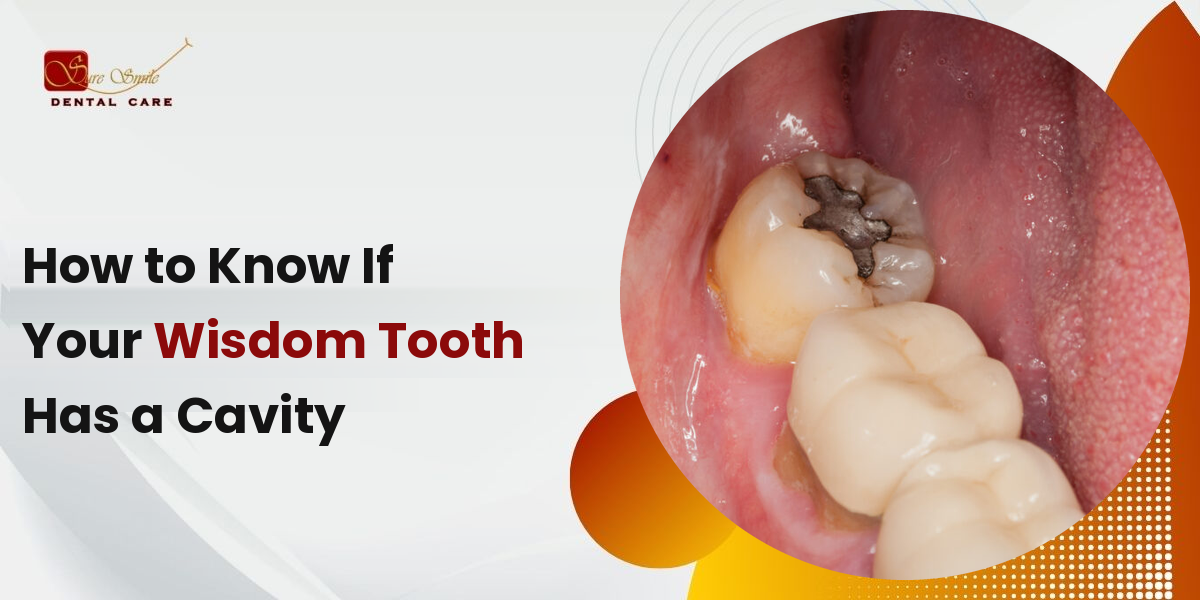
Have you ever experienced an uncomfortable sensation at the very back of your mouth and wondered whether your wisdom tooth might be the reason? Perhaps food keeps getting stuck behind your last molar, you feel a sharp sensation when drinking something cold, or you have noticed an unpleasant taste that does not disappear after brushing. While these symptoms can have several explanations, they may sometimes indicate a cavity in wisdom tooth.
Wisdom teeth are particularly difficult to examine and clean because of their location. They usually emerge during the late teenage years or early adulthood, although their development and eruption vary considerably. Some wisdom teeth grow into a functional position, while others remain partially covered by gum tissue or become trapped beneath neighbouring teeth. These differences can affect how easily plaque accumulates and whether decay develops.
A cavity in wisdom tooth may initially produce no noticeable symptoms. As decay progresses, however, sensitivity, pain, food trapping or localised swelling may occur. Recognising possible warning signs is useful, but determining whether a wisdom tooth has a cavity requires a dental examination. This article explains the causes of wisdom tooth decay, the symptoms to look for, how cavities are diagnosed and when filling, monitoring or extraction may be considered.
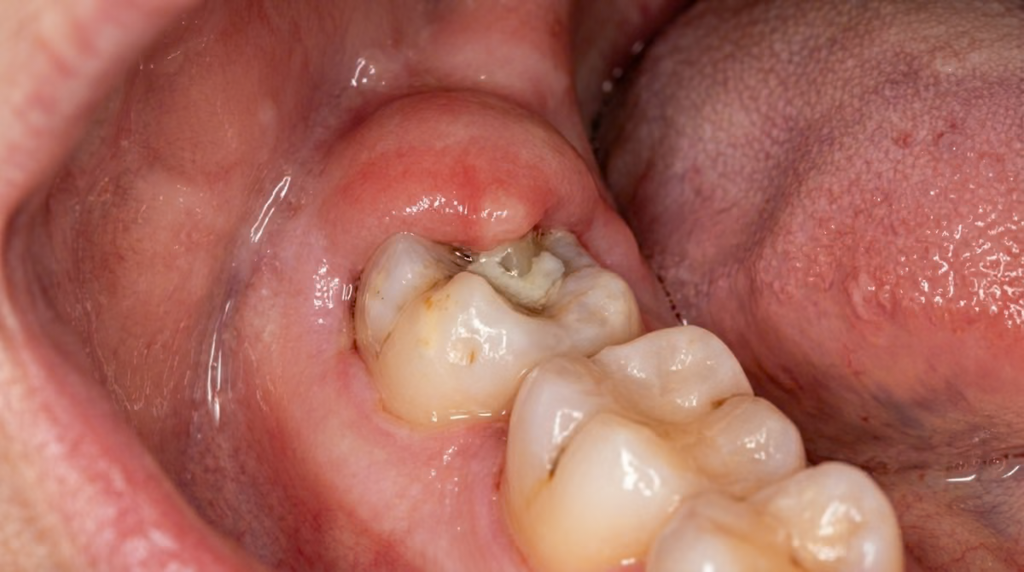
What Is a Cavity in a Wisdom Tooth?
A cavity in wisdom tooth is an area of tooth structure damaged by dental caries, commonly known as tooth decay. Wisdom teeth, also called third molars, are located behind the second molars at the back of the upper and lower jaws. Like other permanent teeth, they have enamel covering their crowns, dentine beneath the enamel and a central pulp containing nerves and blood vessels.
Dental caries develops when bacteria in plaque metabolise sugars and certain carbohydrates, producing acids that gradually remove minerals from the tooth surface. During the early stages, this process may cause demineralisation without creating a physical hole. If mineral loss continues, the enamel can eventually break down, forming a cavity. Once decay reaches the dentine, it may progress more rapidly because dentine is less mineralised than enamel.
A wisdom tooth cavity develops through essentially the same biological process as decay in other teeth. However, the location, position and accessibility of wisdom teeth can create additional challenges for cleaning, diagnosis and treatment. A tooth that has erupted normally may be relatively straightforward to maintain, whereas a partially erupted or tilted tooth may collect plaque in areas that are difficult to reach.
Why Are Wisdom Teeth More Susceptible to Cavities?
Wisdom teeth are not inherently destined to decay, but their position can create conditions that make effective cleaning more difficult. Some people have sufficient jaw space for wisdom teeth to emerge normally, while others develop partially erupted, angled or impacted third molars. These variations can influence the risk of a cavity in wisdom tooth and affect the surrounding gums and neighbouring teeth.
1. Difficult Access During Brushing
Wisdom teeth sit at the farthest end of the dental arch, making them relatively difficult to reach with a toothbrush. People may brush their front teeth and first and second molars thoroughly while unintentionally missing parts of the wisdom teeth, particularly the surfaces closest to the cheek or behind the crown. Restricted mouth opening, discomfort or an angled tooth can make cleaning even more challenging. Over time, persistent plaque accumulation increases the opportunity for bacterial acids to damage enamel. Appropriate brushing technique, suitable toothbrush design and individualised dental advice can help improve access to these areas.
2. Partial Eruption and Gum Coverage
Some wisdom teeth emerge only partially through the gums, leaving part of the crown covered by soft tissue. This creates a space where food particles and plaque can collect. The gum covering, sometimes called an operculum, may also become inflamed or infected. Although gum inflammation around a partially erupted wisdom tooth is not the same as dental caries, the two conditions can occur together. A cavity in wisdom tooth may be difficult to identify when part of the tooth is hidden by gum tissue, making professional examination particularly important.
3. Food Trapping Between the Last Molars
When a wisdom tooth is tilted towards the adjacent second molar, food may become trapped between the two teeth. This can make cleaning difficult and increase plaque retention. Depending on the position of the teeth, decay may develop on the wisdom tooth, the neighbouring second molar or both. This is particularly significant because the second molar plays an established role in chewing and may be affected by problems associated with an improperly positioned wisdom tooth. Recurrent food trapping therefore deserves assessment even when significant pain is absent.
4. Irregular Tooth Position and Impaction
An impacted wisdom tooth is one that has not fully emerged into its expected position, often because of insufficient space or obstruction by another tooth or bone. Impaction can be partial or complete, and not every impacted wisdom tooth causes problems. However, a partially exposed tooth that sits at an angle may be difficult to clean and may create plaque-retentive areas. The risk of wisdom teeth decay depends on the specific anatomy and exposure to the oral environment. A completely unerupted tooth is not exposed to the same direct plaque-related risks as a partially erupted tooth.
5. Dietary Habits and Plaque Accumulation
Frequent consumption of sugary foods and beverages can contribute to decay in wisdom teeth just as it does elsewhere in the mouth. Each exposure provides oral bacteria with carbohydrates that can be converted into acids. When plaque remains around difficult-to-clean surfaces, repeated acid attacks may gradually weaken enamel. People who frequently snack or sip sweetened drinks may experience prolonged periods during which the teeth are exposed to acidic conditions. A consistent oral hygiene routine and reduced frequency of sugary exposures help lower the risk of developing a cavity in wisdom tooth.
How to Know If Your Wisdom Tooth Has a Cavity: 8 Possible Warning Signs
The symptoms of a wisdom tooth cavity depend on how far the decay has progressed, whether the tooth is fully erupted and whether nearby tissues are also affected. Some cavities are discovered during routine examinations before the patient experiences discomfort. Others become noticeable only after they involve deeper tooth structures.
Importantly, wisdom tooth decay symptoms are not specific to cavities. Gum infections, tooth fractures, food impaction and problems involving the adjacent molar can produce similar sensations. The following signs may suggest that an examination is needed.
1. Pain at the Back of Your Mouth
One possible sign of a cavity in wisdom tooth is pain around the last molar. The discomfort may be mild and intermittent initially, or it may develop into a persistent ache. As decay extends deeper into the tooth, irritation of the pulp can cause more noticeable symptoms. However, pain at the back of the mouth is not always caused by a cavity. Inflammation around a partially erupted wisdom tooth, gum disease or a problem with the neighbouring second molar may produce a similar sensation. The location of pain alone cannot identify the affected tooth.
2. Sensitivity to Hot, Cold or Sweet Foods
A wisdom tooth affected by decay may become sensitive when exposed to cold water, hot drinks or sweet foods. This can occur when enamel damage exposes underlying dentine or when the pulp becomes irritated. Brief sensitivity that settles after the stimulus disappears may have a different explanation from pain that persists for an extended period. Both patterns can occur with dental conditions other than cavities, including tooth wear and gum recession. If temperature sensitivity repeatedly affects the back of your mouth, it is worth having the area examined rather than assuming that a particular wisdom tooth is responsible.
3. A Dark Spot or Visible Hole
A brown, grey or black area on a wisdom tooth can sometimes indicate decay. In more advanced cases, a physical opening or broken section of the tooth may become visible. However, not every dark mark represents a cavity, as staining and naturally occurring variations in tooth appearance can produce similar changes. Conversely, a cavity in wisdom tooth may develop between teeth or beneath an overhanging gum where it cannot easily be seen. Attempting to inspect the area with sharp objects or probing it yourself may injure the gums and should be avoided.
4. Pain When Chewing or Biting
Wisdom tooth cavity pain may become noticeable when pressure is applied during chewing. Advanced decay can weaken tooth structure, and inflammation affecting the tissues around the root can also make biting uncomfortable. Nevertheless, pain on biting has several other possible explanations, including cracks, gum inflammation, an improperly positioned tooth or infection involving the adjacent molar. The pattern may be intermittent, occurring only with certain foods, or more consistent as the underlying condition progresses. A clinical examination helps determine whether the discomfort is associated with decay or another problem.
5. Persistent Food Trapping
If food repeatedly becomes stuck behind your second molar, the shape or position of your wisdom tooth may be contributing. Partially erupted or angled wisdom teeth can create areas that are challenging to clean. Trapped food does not necessarily mean that a cavity has formed, but it may increase local plaque accumulation and irritate the surrounding gums. When food trapping is frequent, the dentist may assess both the wisdom tooth and the neighbouring molar for early decay, gum inflammation and other complications.
6. Bad Breath or an Unpleasant Taste
Persistent bad breath or an unpleasant taste can sometimes occur when plaque, food debris or infection is present around a wisdom tooth. If decay has progressed substantially, bacteria and damaged tooth structure may contribute to an unpleasant taste. However, these symptoms are not reliable indicators of a cavity in wisdom tooth because they can also arise from gum disease, tongue coating, dry mouth and other oral conditions. An unpleasant taste accompanied by pain, swelling or discharge may suggest a localised infection and should be evaluated promptly.
7. Swelling or Tenderness Around the Last Molar
Swelling near a wisdom tooth may result from inflamed gum tissue, food impaction or an infection. A common condition associated with partially erupted wisdom teeth is pericoronitis, which occurs when the gum tissue surrounding the tooth becomes inflamed. Although this can occur without decay, a cavity and gum inflammation may be present simultaneously. Symptoms can include redness, tenderness, an unpleasant taste and discomfort when opening the mouth. Increasing swelling, fever or difficulty opening the mouth requires prompt assessment, as these signs may indicate an infection requiring treatment.
8. Persistent or Throbbing Pain
More advanced tooth decay can sometimes lead to inflammation or infection within the dental pulp. This may cause spontaneous, throbbing or prolonged pain that affects sleep and daily activities. Such symptoms can occur with a cavity in wisdom tooth, but they are not proof that the wisdom tooth itself is responsible. Pain may also be referred from a neighbouring molar or another structure. Persistent or worsening discomfort deserves dental assessment because a progressing dental infection or another significant condition may require timely management.
Can You Have a Cavity in Wisdom Tooth Without Pain?
Yes. A cavity in wisdom tooth can develop without causing noticeable pain, particularly during the early stages of tooth decay. Initial demineralisation may affect only the outer enamel, which does not contain nerves. Even after a physical cavity develops, symptoms can remain absent until decay becomes deeper or the tooth is exposed to particular triggers. This is why relying exclusively on pain can delay the identification of dental problems.
Wisdom teeth create an additional diagnostic challenge because their location can make visual inspection difficult. A cavity on the surface facing the adjacent second molar may not be visible in an ordinary mirror, while decay beneath gum tissue may remain unnoticed. In some cases, the neighbouring tooth can also be affected without obvious symptoms.
A dental examination may include direct inspection, assessment of the gums and radiographs when clinically indicated. These methods help determine whether decay is present and whether it has affected surrounding structures.
Wisdom Tooth Cavity Pain vs Normal Wisdom Tooth Eruption Pain
People sometimes attribute discomfort at the back of the mouth to the natural eruption of wisdom teeth. However, not every episode of pain in this area is related to normal tooth eruption, and distinguishing wisdom tooth cavity pain from gum inflammation or other causes is important.
| Feature | Possible eruption-related discomfort | Possible cavity-related discomfort |
| Location | Gum tissue around an emerging tooth | Tooth surface, deeper tooth tissues or surrounding structures |
| Common triggers | Local gum irritation or pressure | Sweet foods, temperature changes, chewing or spontaneous pain |
| Visible findings | Partially erupted tooth, tender gum | Discolouration, cavity or no visible change |
| Duration | Variable; may settle or recur | May persist or progress as decay advances |
| Associated problems | Pericoronitis or food trapping | Pulp inflammation, infection or structural damage |
| Dental assessment | Needed for significant or recurrent symptoms | Needed to confirm decay and determine treatment |
These differences are general observations rather than diagnostic criteria. Both conditions can occur together, and symptoms may overlap considerably. A person with wisdom tooth cavity pain may also have inflammation around the tooth, making an accurate diagnosis more complex.
How Do Dentists Diagnose a Cavity in Wisdom Tooth?
Diagnosing a cavity in wisdom tooth involves more than identifying a dark spot or asking whether the tooth hurts. A dentist first reviews the symptoms, including when discomfort began, what triggers it, whether the pain persists and whether there has been previous dental treatment. The examination also considers whether the wisdom tooth is fully erupted, partially erupted or impacted.
During the clinical assessment, the dentist examines accessible tooth surfaces, the surrounding gum tissue and the adjacent second molar. Signs of food trapping, plaque accumulation, softening of tooth structure, gum inflammation or damaged restorations may be relevant. If the wisdom tooth is difficult to see, a dental mirror and appropriate instruments can help assess the area.
Dental radiographs may be recommended to evaluate suspected decay between teeth, assess the position of the wisdom tooth or investigate symptoms that cannot be explained through direct examination. Bitewing or periapical radiographs may help evaluate tooth decay when appropriate, while panoramic imaging may be useful for understanding the position of impacted wisdom teeth and surrounding anatomy. Not every patient requires every type of X-ray.
The findings help establish whether a cavity is present, how extensive it is and whether the tooth can be restored or should be monitored.

Can a Wisdom Tooth Cavity Be Filled?
A cavity in wisdom tooth does not automatically mean that the tooth must be removed. In some circumstances, a wisdom tooth can be treated with a dental filling, particularly when it has fully erupted into a useful position, the decay is accessible and sufficient healthy tooth structure remains.
Like other permanent molars, a wisdom tooth may contribute to chewing when it is properly positioned and contacts an opposing tooth. If the tooth is functional, can be cleaned effectively and is suitable for restoration, preserving it may be a reasonable option. The dentist considers the size and location of the cavity, the tooth’s accessibility, the health of the pulp and the condition of the surrounding tissues before recommending treatment.
However, filling a wisdom tooth can sometimes be technically challenging. Limited access, restricted visibility and the difficulty of keeping the treatment area dry may affect the feasibility of placing a predictable restoration. A filling also does not address problems caused by significant impaction or persistent gum inflammation.
The decision should therefore be based on clinical findings rather than a general assumption that all wisdom teeth should be extracted.
When Is Wisdom Tooth Extraction for a Cavity Considered?
Wisdom tooth extraction for a cavity may be considered when decay is extensive, the tooth cannot be restored appropriately or its position creates ongoing problems. Extraction is not necessarily the first option for every decayed wisdom tooth, and the potential benefits of removal should be weighed against the risks of surgery and the possibility of retaining a functional tooth.
A dentist may discuss extraction when a wisdom tooth has deep or recurrent decay, cannot be cleaned adequately, has insufficient remaining tooth structure for restoration or is associated with repeated episodes of infection. Removal may also be considered when the wisdom tooth is contributing to decay or damage involving the adjacent second molar.
Other factors include the tooth’s eruption status, its relationship to nearby anatomical structures, the patient’s age and medical history, and whether a restoration would be clinically feasible. Some patients may require assessment by an oral and maxillofacial surgeon, particularly when the tooth is deeply impacted or close to important nerves.
Wisdom tooth extraction for a cavity should follow an individual examination and an explanation of reasonable treatment alternatives.
What Happens During Wisdom Tooth Extraction?
When removal is recommended, the procedure depends on the position and anatomy of the tooth. A fully erupted wisdom tooth may sometimes be removed using techniques similar to those used for other teeth. A partially erupted or impacted tooth may require a surgical approach involving an incision in the gum and, in selected cases, removal of surrounding bone or division of the tooth into smaller sections.
Local anaesthesia is commonly used to manage procedural pain. Sedation or other anaesthetic options may be considered in particular circumstances, depending on the complexity of the procedure and individual clinical requirements. Recovery experiences vary, and temporary swelling, discomfort, restricted mouth opening or minor bleeding can occur.
Potential complications include infection, dry socket and, for some lower wisdom teeth, injury to nearby nerves that may affect sensation in the lip, chin or tongue. These risks should be discussed before treatment. Not every wisdom tooth extraction involves the same level of difficulty or risk.
Filling vs Extraction: What Is the Difference?
The choice between restoring and extracting a cavity in wisdom tooth depends on whether the tooth can be maintained in a healthy, functional condition.
| Clinical consideration | Filling or restorative treatment | Extraction |
| Tooth position | More feasible when fully erupted and accessible | May be considered for problematic impaction or positioning |
| Extent of decay | Often suitable for limited, restorable cavities | May be considered when damage is too extensive |
| Ability to clean | Better suited to teeth that can be maintained | Considered when persistent hygiene difficulties contribute to disease |
| Effect on adjacent tooth | Appropriate when neighbouring structures are unaffected | May be considered if the wisdom tooth contributes to adjacent tooth damage |
| Long-term maintenance | Requires continued cleaning and dental monitoring | Requires postoperative healing and follow-up as advised |
| Main limitation | Does not correct problematic impaction | Removes the tooth and carries procedural risks |
In certain cases, more complex restorative options or root canal treatment may also be considered, although their suitability for wisdom teeth depends on anatomy, accessibility and clinical prognosis. There is no universal rule that a filling is always preferable or that wisdom tooth extraction for a cavity is always necessary.
What Happens if You Leave a Decayed Wisdom Tooth Untreated?
Leaving a cavity in wisdom tooth untreated can allow the disease to progress, although the rate varies between individuals. Initially, the cavity may remain relatively small and produce limited symptoms. Continued plaque accumulation and repeated acid exposure can result in further mineral loss, enlargement of the cavity and involvement of deeper tooth tissues.
As decay advances, the tooth may become more sensitive or painful. If bacteria reach the pulp, inflammation or infection may develop. In some circumstances, an abscess can form, potentially causing swelling, fever or other symptoms that require prompt treatment. Decay and infection do not progress identically in every patient, and severe complications are not inevitable.
An angled or partially erupted wisdom tooth may also contribute to decay involving the neighbouring second molar. This is particularly important because damage to the adjacent tooth may create additional treatment needs.
Even when symptoms are absent, a cavity in wisdom tooth should be assessed to determine whether prevention, restoration or extraction is appropriate. Delaying evaluation solely because the pain has settled may allow an underlying problem to continue.
Can Wisdom Tooth Decay Spread to Other Teeth?
Wisdom teeth decay does not literally move from one tooth to another. Dental caries is a local disease process involving plaque bacteria, susceptible tooth surfaces, dietary sugars and other contributing factors. However, a decayed or poorly positioned wisdom tooth may create conditions that increase the risk of decay in the adjacent second molar.
For example, an angled wisdom tooth can form a difficult-to-clean contact area where food and plaque accumulate. If the neighbouring molar is repeatedly exposed to bacterial acids in this area, it may also develop a cavity. The dentist may therefore examine both teeth when investigating a cavity in wisdom tooth, particularly if the third molar is tilted or partially erupted.
Maintaining the health of the second molar is an important consideration when discussing treatment options. The decision to retain or remove a wisdom tooth should account for its effect on the rest of the mouth, rather than focusing exclusively on the wisdom tooth itself.
How to Manage Wisdom Tooth Cavity Pain Before Seeing a Dentist
If you suspect a cavity in wisdom tooth and cannot obtain immediate dental assessment, certain measures may help reduce discomfort temporarily. These approaches do not remove decay or treat an established infection, and persistent symptoms require professional evaluation.
You may find it more comfortable to eat soft foods, chew on the opposite side and avoid foods or drinks that trigger sensitivity. Continue cleaning the area gently with a soft-bristled toothbrush, taking care not to injure inflamed gum tissue. For adults who can rinse and spit safely, a mild warm saltwater rinse may provide temporary comfort when the surrounding gums are irritated.
Over-the-counter pain medication, such as paracetamol or ibuprofen, may be appropriate for some people when used according to the label and advice from a qualified healthcare professional. However, certain medical conditions, pregnancy, allergies and other medications may make some pain relievers unsuitable.
Avoid placing aspirin directly against the tooth or gum, attempting to drain swelling yourself, applying concentrated essential oils or taking leftover antibiotics. These practices can cause harm or delay suitable treatment.
When Is Wisdom Tooth Pain an Emergency?
A cavity in wisdom tooth is not automatically a medical emergency, but certain symptoms require urgent attention. Severe or worsening pain, swelling around the gums or jaw, fever, an unpleasant taste associated with swelling, and increasing difficulty opening the mouth warrant prompt dental assessment.
Seek immediate emergency medical care if swelling spreads rapidly into the face or neck, breathing or swallowing becomes difficult, or swelling affects the eye or vision. These symptoms may indicate a serious infection requiring hospital-level assessment.
Pain that suddenly disappears should not automatically be interpreted as recovery. In some circumstances, changes within an infected tooth can alter pain without resolving the underlying disease. The safest approach is to have persistent or recurrent symptoms evaluated.
How to Prevent a Cavity in Wisdom Tooth
Preventing a cavity in wisdom tooth involves many of the same measures used to protect other permanent teeth. However, wisdom teeth may require additional attention because they are difficult to reach and may have unusual positions.
Brush the Back Molars Carefully
Brush twice daily with fluoride toothpaste, ensuring that the toothbrush reaches the surfaces of the last erupted molars. A small-headed, soft-bristled toothbrush may help improve access for some people. Gentle, systematic brushing is preferable to aggressive scrubbing, which can irritate the gums and contribute to tooth surface wear.
Clean Between the Wisdom Tooth and Second Molar
When the contact area is accessible, floss or another appropriate interdental cleaning aid may help remove plaque between the wisdom tooth and the adjacent molar. The most suitable tool depends on the available space, tooth position and gum condition. For partially erupted wisdom teeth, professional guidance may be useful to avoid injuring surrounding tissues.
Limit Frequent Sugary Snacks and Drinks
Reducing the frequency of sugary foods and beverages helps limit repeated acid production by plaque bacteria. This supports tooth enamel protection and may reduce the risk of wisdom teeth decay. Drinking water after meals can also help clear food debris, although it does not replace brushing and interdental cleaning.
Monitor Partially Erupted Wisdom Teeth
Wisdom teeth that have only partially emerged may require closer attention because food trapping and gum inflammation can be difficult to manage. If you repeatedly experience discomfort, swelling or an unpleasant taste around a wisdom tooth, an assessment can help identify whether the problem involves decay, pericoronitis or another condition.
Attend Dental Reviews Appropriate to Your Risk
Dental examinations allow wisdom teeth to be monitored for decay, changes in position and effects on neighbouring teeth. Not every wisdom tooth needs removal, and the appropriate review interval varies according to individual oral health needs. Early identification of problems may allow more conservative management in suitable cases.
When Should You Consult a Dentist About a Wisdom Tooth Cavity?
If you suspect a cavity in wisdom tooth, arranging a dental assessment is advisable even when the pain is mild or intermittent. A dentist can evaluate whether the discomfort is caused by decay, gum inflammation, an adjacent molar or another condition. Examination is particularly important when food repeatedly gets trapped around the last molar, sensitivity persists or a visible change develops in the tooth surface.
A cavity does not always require extraction, just as every impacted wisdom tooth does not automatically require removal. The appropriate approach depends on the tooth’s condition, its position, the surrounding tissues and the likelihood of maintaining it over time.
For individuals in Horamavu and nearby areas of Bengaluru, Sure Smile Dental Care provides general dental assessments and restorative dentistry services. Patients experiencing discomfort around their wisdom teeth can seek an individual clinical evaluation to understand the possible causes and treatment considerations.
Conclusion
Recognising a cavity in wisdom tooth can be challenging because early decay may produce no symptoms and the affected area can be difficult to see or clean. Pain at the back of the mouth, sensitivity, food trapping, discolouration and gum swelling are possible warning signs, but they may also occur with other dental conditions.
A dental examination helps determine whether decay is present, how far it has progressed and whether the wisdom tooth can be maintained. Some cavities may be managed through preventive or restorative treatment, while others may require extraction when the tooth cannot be restored appropriately or is causing additional problems.
The most important considerations are protecting the surrounding teeth, maintaining effective oral hygiene and addressing symptoms before further complications develop.
Frequently Asked Questions About a Cavity in Wisdom Tooth
1. How do I know if I have a cavity in wisdom tooth?
A cavity in wisdom tooth may cause sensitivity to hot, cold or sweet foods, pain while chewing, visible discolouration or an unpleasant taste. However, early cavities often cause no symptoms, and decay between the wisdom tooth and neighbouring molar may not be visible. A dentist can examine the area and recommend an X-ray when clinically indicated to identify decay and assess its extent. Pain alone is not enough to confirm a cavity because gum inflammation, tooth fractures and problems involving adjacent teeth can produce similar symptoms.
2. Can a wisdom tooth cavity develop without pain?
Yes. A wisdom tooth cavity may develop without causing noticeable discomfort, particularly when decay is limited to the outer enamel or has not significantly irritated the pulp. The location of wisdom teeth can also make early changes difficult to recognise. Some cavities are discovered during dental examinations before symptoms appear. The absence of pain does not necessarily mean the tooth is healthy, so wisdom teeth should be included in appropriate dental assessments, especially when they are partially erupted or difficult to clean.
3. What are the most common wisdom tooth decay symptoms?
Common wisdom tooth decay symptoms can include sensitivity to temperature changes, discomfort when chewing, visible changes in tooth colour, food trapping and persistent pain. If decay becomes extensive or infection develops, swelling or prolonged discomfort may occur. However, these signs are not unique to dental caries. Partially erupted wisdom teeth may develop gum inflammation even without a cavity. A dental examination helps distinguish between decay, pericoronitis, gum disease and other conditions affecting the back of the mouth.
4. Does a cavity in wisdom tooth always require extraction?
No. A cavity in wisdom tooth does not automatically require extraction. A wisdom tooth that has erupted normally, functions adequately and can be cleaned and restored may be suitable for a filling. Extraction may be considered when the tooth is extensively damaged, cannot be restored appropriately, repeatedly develops infection or contributes to problems involving adjacent teeth. The dentist assesses the tooth’s position, the extent of decay and the potential benefits and risks of each treatment before recommending an approach.
5. Can a dentist fill a wisdom tooth cavity?
Yes. Dentists can sometimes treat a wisdom tooth cavity with a filling when the damaged area is accessible and enough healthy tooth structure remains. The procedure is broadly similar to filling a cavity in another permanent molar. However, limited access, unusual positioning and difficulty maintaining a clean, dry treatment field may make restoration more challenging. The dentist also considers whether the tooth is functional and can be maintained effectively. Not every decayed wisdom tooth is a suitable candidate for a filling.
6. Why does my wisdom tooth cavity hurt more at night?
Wisdom tooth cavity pain may feel more noticeable at night because there are fewer distractions, while inflammation involving the pulp or surrounding tissues can cause discomfort that persists during rest. Some individuals also experience changes in their perception of throbbing pain when lying down. However, nighttime pain is not specific to a cavity and may occur with gum infections, grinding or problems affecting neighbouring teeth. Repeated pain that interrupts sleep, becomes severe or continues without an obvious trigger warrants prompt dental assessment.
7. Can wisdom teeth decay affect the second molar?
Yes. Wisdom teeth decay and the positioning of third molars can contribute to conditions that place the adjacent second molar at risk. When a wisdom tooth is tilted or partially erupted, food and plaque may accumulate in the contact area between the two teeth. This can increase the likelihood of decay affecting one or both tooth surfaces. The dentist may evaluate the adjacent molar when assessing a cavity in wisdom tooth, because preserving the health of surrounding teeth is an important part of treatment planning.
8. Can a wisdom tooth cavity heal naturally?
Early enamel demineralisation may sometimes be reversed through remineralisation supported by fluoride, saliva and appropriate preventive habits. However, once a physical cavity has formed, the missing tooth structure cannot naturally regrow. A cavity in wisdom tooth may therefore require restorative treatment or another clinical approach, depending on its severity and the condition of the tooth. Brushing, rinsing and dietary changes can help reduce further decay, but they cannot reliably repair an established hole in the tooth.
9. What happens if I ignore a cavity in wisdom tooth?
An untreated cavity in wisdom tooth may gradually enlarge as decay progresses into deeper tooth structures. This can eventually lead to sensitivity, pain, pulp inflammation or infection. In some circumstances, the position of the wisdom tooth may also contribute to decay in the neighbouring second molar. The rate of progression varies, and not every cavity produces immediate symptoms. However, delaying assessment can allow a manageable condition to become more complex, so suspected decay should be evaluated even when discomfort is limited.
10. Is wisdom tooth extraction for a cavity painful?
Wisdom tooth extraction for a cavity is generally performed using appropriate anaesthesia, commonly local anaesthesia, to reduce procedural pain. Patients may experience pressure or movement during the procedure, and temporary discomfort, swelling or limited mouth opening can occur afterwards. Recovery depends on whether the tooth is fully erupted or impacted, the complexity of the extraction and individual healing factors. Potential complications include dry socket, infection and nerve-related symptoms in certain cases. The treating clinician should explain the procedure, risks and postoperative instructions before treatment.
11. How can I relieve wisdom tooth cavity pain at home?
Temporary measures for wisdom tooth cavity pain include avoiding foods that trigger discomfort, choosing soft meals and gently cleaning the surrounding area. Adults may use a mild warm saltwater rinse for local gum irritation, while appropriate over-the-counter pain medicines may help when used according to medical advice and product instructions. These measures do not eliminate decay or infection. Avoid placing aspirin on the gums, using concentrated oils or taking antibiotics without a prescription. Persistent pain, fever or swelling requires dental assessment.
12. How can I prevent a cavity in wisdom tooth?
Preventing a cavity in wisdom tooth involves brushing twice daily with fluoride toothpaste, cleaning accessible spaces between the back teeth and reducing frequent sugary food and drink consumption. Paying attention to partially erupted wisdom teeth is especially important because food and plaque may become trapped beneath surrounding gum tissue. Dental assessments can help identify early decay, gum inflammation and problems affecting adjacent molars. Some wisdom teeth are difficult to maintain because of their position, making individual preventive advice useful for long-term oral health.