
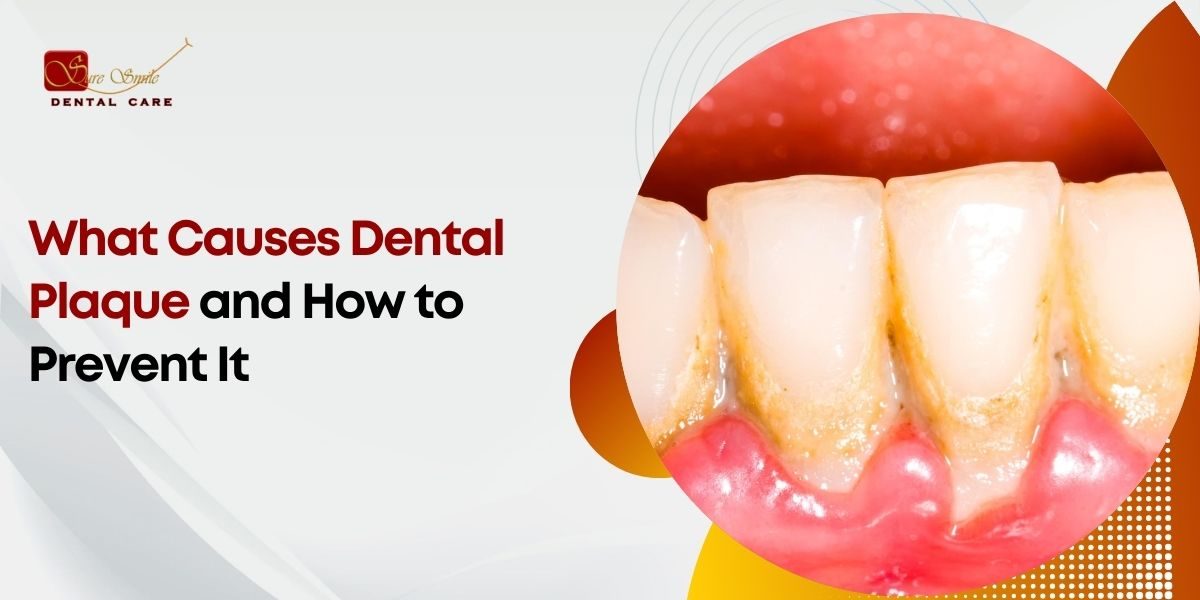
You may brush in the morning and still notice a sticky feeling on your teeth by evening. That thin film is often dental plaque, and it forms naturally as bacteria collect on tooth surfaces.
The main causes of dental plaque are incomplete brushing, not cleaning between the teeth, frequent sugary foods and drinks, and areas that are difficult to clean. The best plaque prevention routine is simple: brush twice daily with fluoride toothpaste, clean between the teeth every day, limit frequent sugar exposure, and attend regular dental check-ups.
At Sure Smile Dental Care, we encourage patients to control buildup early, before it contributes to cavities, bad breath, swollen gums, or gum disease.
What Is Dental Plaque?
Plaque is a soft, sticky film containing bacteria that continually forms on the teeth. It can collect around the gumline, between teeth, on back teeth, and around dental work.
The American Dental Association explains that plaque bacteria use sugars from foods and drinks to produce acids that can attack tooth enamel. If the film is not removed through brushing and cleaning between the teeth, it can eventually harden into tartar.
This is why plaque buildup on teeth is more than a cosmetic concern.
What Are the Main Causes of Plaque?
Plaque formation is normal. The problem begins when it stays on the teeth long enough to grow and harden.
Understanding the causes of dental plaque helps you identify the habits that may be increasing buildup.
1. Incomplete Brushing
Brushing quickly often leaves the inner tooth surfaces, back molars, gumline, and crowded areas untouched. Over time, plaque buildup on teeth becomes more noticeable in these locations.
One of the most useful oral hygiene tips is to brush every surface slowly instead of focusing only on the front teeth.
2. Not Cleaning Between the Teeth
A toothbrush cannot reach every contact point between two teeth. If you rarely floss or use another interdental cleaner, bacteria can remain between the teeth even when the visible surfaces look clean.
Daily interdental cleaning is an important part of plaque prevention. If you are wondering how to remove dental plaque from tight spaces, floss or a dentist-recommended interdental brush can help clean areas your toothbrush misses.
3. Frequent Sugary Foods and Drinks
Plaque bacteria use sugars and produce acids that attack enamel. Frequent snacking, sweetened drinks, and slowly sipping sugary beverages give bacteria repeated opportunities to produce these acids.
Reducing how often your teeth are exposed to sugar is one of the simplest ways to lower the risk of plaque-related decay.
4. Crowded Teeth and Dental Work
Crooked or overlapping teeth can create areas that are harder to clean. Plaque buildup on teeth can also occur around braces, retainers, crowns, and bridges when cleaning is incomplete.
Your dentist can provide oral hygiene tips based on your tooth alignment and dental work rather than using the same cleaning method for everyone.
Plaque vs Tartar: What Is the Difference?
Understanding plaque vs tartar is important because the two are not removed in the same way.
Plaque is soft and can usually be disrupted through brushing and interdental cleaning. Tartar, also called calculus, is plaque that has mineralized and hardened.
The National Institute of Dental and Craniofacial Research states that tartar cannot be removed by normal brushing and flossing. It needs professional removal.
In simple terms:
- Plaque is soft and sticky.
- Tartar is hardened plaque.
- Plaque can usually be controlled at home.
- Tartar needs professional cleaning.
The plaque vs tartar difference explains why brushing harder will not remove rough, hardened deposits.
What Happens If Plaque Is Not Removed?
When plaque remains around the teeth and gumline, it can affect both enamel and gum tissue.
You may notice:
- Sticky or fuzzy teeth
- Persistent bad breath
- Red or swollen gums
- Bleeding while brushing
- Hardened yellow or brown deposits
- Increased risk of cavities
The CDC explains that plaque left on teeth can contribute to gingivitis. Once it hardens into tartar, toothbrushing cannot remove it and professional treatment is required.
If your gums have already started bleeding or swelling, read Sure Smile Dental Care’s guide to gum disease treatment to understand why early care matters.
How Can You Remove Plaque at Home?
People often search for how to remove dental plaque after their teeth begin feeling rough or sticky. The better approach is to remove the soft film every day before it hardens.
Brush Twice a Day
Brush twice daily using fluoride toothpaste. Pay attention to the gumline, back teeth, inner surfaces, and areas where food commonly collects.
Use gentle movements instead of aggressive scrubbing. Consistent brushing is one of the most important oral hygiene tips for removing soft buildup from accessible tooth surfaces.
Clean Between the Teeth Daily
Floss works well for many people, while interdental brushes may be useful when spaces are larger. People with braces, bridges, or implants may need different cleaning aids.
If you are unsure how to remove dental plaque around dental work, ask your dentist to demonstrate the safest technique for your mouth.
Which Foods Can Make Plaque Problems Worse?
Frequent sugary foods and drinks give plaque bacteria more opportunities to produce enamel-damaging acids.
Sugary soft drinks, sweetened tea or coffee, candy, biscuits, cakes, and frequent sweet snacks are common examples. You do not need to eliminate every carbohydrate, but reducing repeated sugar exposure can help.
These changes, together with effective cleaning, can reduce plaque buildup on teeth.
Can Mouthwash Remove Plaque?
Mouthwash can support an oral-care routine, but it should not replace brushing and cleaning between the teeth.
When learning how to remove dental plaque, think of mouthwash as a supporting product rather than a shortcut around mechanical cleaning.
When Do You Need Professional Cleaning?
Even with good home care, tartar may form in areas that are difficult to reach.
Consider a dental evaluation if you notice hard deposits that do not brush away, gums that bleed repeatedly, persistent bad breath, swelling, tenderness, or rough buildup close to the gumline.
At this stage, the plaque vs tartar distinction becomes important. Soft buildup may improve with better daily care, while hardened calculus needs professional removal.
Sure Smile Dental Care includes professional teeth cleaning, scaling, gum care, and oral hygiene education within its general dentistry services.
How Can You Prevent Plaque From Returning?
You cannot permanently stop bacteria from living in your mouth. The goal is consistent plaque prevention so buildup does not stay long enough to cause problems.
Build these habits into your routine:
- Brush twice daily with fluoride toothpaste.
- Clean between your teeth every day.
- Pay attention to the gumline and back teeth.
- Limit frequent sugary snacks and drinks.
- Drink water regularly.
- Clean braces and dental restorations carefully.
- Attend dental check-ups and cleanings as advised.
For more everyday guidance, read Sure Smile Dental Care’s article on oral health importance, which explains how daily oral care helps reduce common dental problems.
These habits are among the most practical oral hygiene tips for protecting your smile.
Common Mistakes That Make Plaque Harder to Control
Common mistakes include brushing too quickly, missing the gumline, never cleaning between the teeth, using excessive pressure, and replacing brushing with mouthwash.
Knowing the causes of dental plaque is useful, but prevention works only when healthy habits are repeated every day.
Why Choose Sure Smile Dental Care for Preventive Dental Care?
Sure Smile Dental Care provides routine dental examinations, professional cleaning, scaling, gum care, and oral hygiene guidance through its general dentistry services.
The team can identify where buildup is forming and explain the causes of dental plaque in your individual case. If tartar repeatedly develops despite brushing, a professional assessment can show where your home-care routine may need improvement.
Wrapping Up
Plaque forms naturally every day, but allowing it to remain on the teeth can increase the risk of cavities, gum inflammation, and tartar.
The best approach is simple: brush thoroughly twice a day, clean between the teeth daily, reduce frequent sugary foods and drinks, and attend dental check-ups as advised.
Good plaque prevention does not depend on complicated routines. It depends on cleaning the right areas consistently.
If you have been searching for how to remove dental plaque because a rough layer remains even after brushing, it may already have hardened into tartar. A dentist can confirm what is present and remove it safely.
Do not wait for bleeding gums or tooth pain to make oral care a priority.
FAQs
1. What causes plaque on teeth?
Bacteria naturally form a sticky film on tooth surfaces. Incomplete brushing, poor interdental cleaning, and frequent sugar exposure can allow it to accumulate.
2. Can plaque be removed at home?
Soft plaque can usually be controlled through thorough brushing and daily interdental cleaning. Hardened tartar needs professional removal.
3. How do I know if I have tartar instead of plaque?
Tartar often feels hard or rough and does not brush away. A dentist can confirm the type of buildup.
4. Does mouthwash prevent plaque?
Some rinses may support an oral-care routine, but they should not replace brushing and interdental cleaning.
5. What is the easiest way to prevent plaque every day?
Brush twice daily, clean between your teeth every day, limit frequent sugary snacks and drinks, and attend regular dental check-ups.