
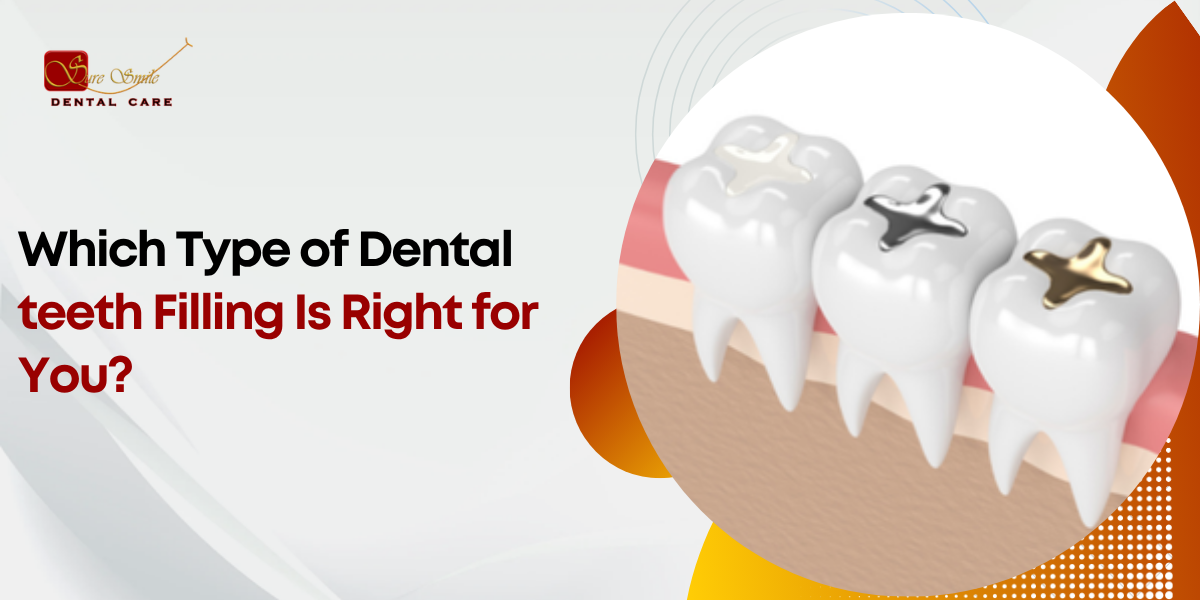
A cavity may seem like a straightforward dental problem, but choosing among different teeth fillings is not always simple. The right material depends on where the cavity is located, how large it is, how much chewing pressure the tooth handles, and your cosmetic preferences.
Modern dentistry offers several cavity filling options, each with specific strengths and limitations. Understanding those differences can help you have a more informed conversation with your dentist.
Why Choosing the Right teeth Fillings Material Matters
The primary purpose of a filling is to restore tooth structure damaged by decay. However, different parts of the mouth experience different levels of pressure. A small cavity in a front tooth has very different requirements from a large cavity in a molar.
That’s why tooth fillings should not be selected based on appearance alone.
Dentists generally consider factors like:
- The size and depth of the cavity
- The location of the affected tooth
- The amount of pressure placed on the tooth
- Cosmetic requirements
- The condition of the remaining tooth structure
- Cost and long-term maintenance
For a broader understanding of restorative dental care, you can explore our Restorative Dentistry services.
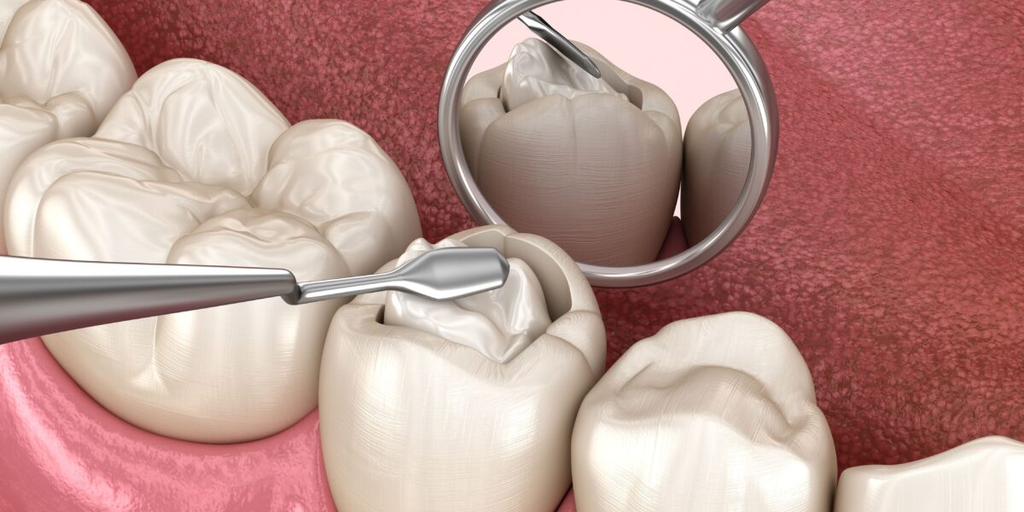
1. Composite Fillings: The Popular Tooth-Coloured Option
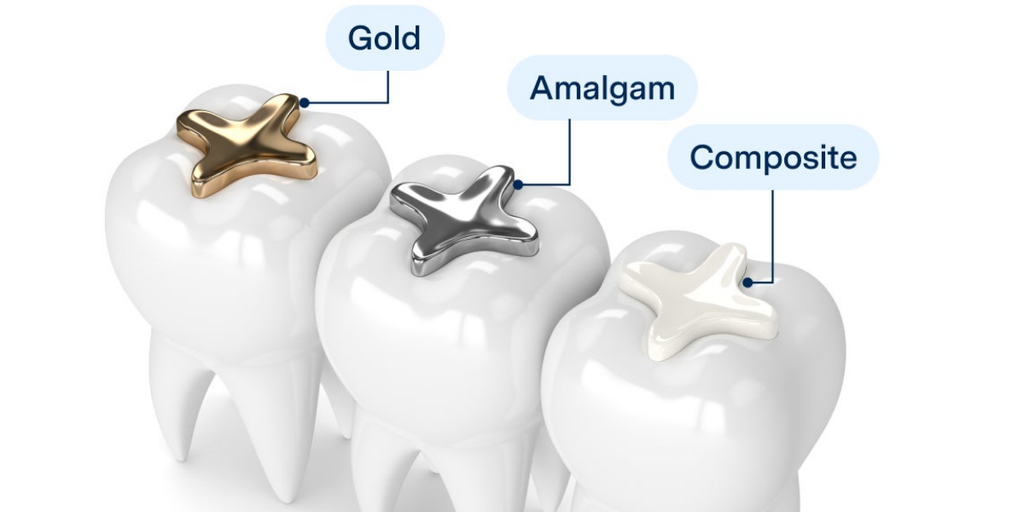
Composite fillings are made from a resin-based material containing fillers like glass or quartz. Their biggest advantage is their ability to blend with the natural colour of your teeth.
For this reason, composite material is often chosen for visible areas of the mouth. It can also be used in appropriate cases on back teeth.
Best suited for:
- Front teeth
- Small to medium cavities
- Patients concerned about appearance
- Areas requiring a tooth-coloured restoration
One advantage of composite restorations is that they bond adhesively to tooth structure. However, they can stain or discolour over time, and their suitability depends on the size and location of the restoration.
For many patients, composite tooth fillings offer a practical balance between appearance and function.
2. Dental Amalgam: Built for Durability
Dental amalgam has been used in dentistry for generations. It is a metal alloy containing mercury along with metals like silver, tin, and copper.
Amalgam is known for its durability and ability to withstand significant chewing forces. It has traditionally been used for posterior teeth, where appearance may be less important than wear resistance.
Best suited for:
- Back teeth
- Areas exposed to heavy chewing pressure
- Patients prioritising durability and affordability
The choice between amalgam and other tooth fillings should always be based on an individual clinical assessment and discussion with your dentist.
3. Glass Ionomer Fillings: Useful in Specific Situations
Glass ionomer materials release fluoride and are commonly used in situations where their particular properties are beneficial.
However, conventional glass ionomer materials generally have lower resistance to fracture and wear than composite materials. They are therefore not typically the first choice for areas exposed to heavy biting forces.
They may be useful for:
- Certain non-load-bearing restorations
- Specific areas near the gumline
- Some temporary restorations
- Clinical situations where fluoride release may be beneficial
A dentist may also consider resin-modified glass ionomer materials, which have improved properties compared with conventional versions.
4. Ceramic Fillings: Aesthetic and Laboratory-Made Restorations
For larger areas of damage, a direct filling may not always be the best solution. Ceramic restorations, like inlays and onlays, can sometimes be considered when more extensive tooth restoration is needed.
Ceramic materials are valued for their tooth-like appearance, chemical stability, and resistance to wear. However, the right ceramic restoration depends on the location of the tooth and the clinical situation.
Ceramic restorations may be considered when:
- The damaged area is too large for a simple filling
- A significant portion of the tooth needs restoration
- A tooth-coloured indirect restoration is preferred
Not every cavity should automatically receive a standard filling. When the loss of tooth structure becomes extensive, an inlay, onlay, or crown may offer a more suitable solution.
What Happens During the Dental teeth Fillings Procedure?
A typical dental filling procedure starts with an examination to determine the extent of decay or damage. Depending on the situation, the area may be numbed with local anaesthesia.
The dentist then removes the decayed tooth material and prepares the affected area for restoration. The selected material is placed according to its specific clinical requirements.
For example, composite materials are bonded to the tooth and commonly hardened using a curing light. Other materials follow different placement techniques.
The goal of tooth filling treatment is not simply to fill an empty space. The restoration should help the tooth function properly while restoring the damaged structure.
How to Choose Between Different Cavity Filling Options
If you are comparing cavity filling options, ask your dentist these practical questions:
- How large is the cavity?
Small and moderate cavities may be suitable for direct restorative materials. Larger areas of damage may require a different approach.
- Which tooth needs treatment?
Front teeth usually place greater emphasis on aesthetics. Molars experience much greater chewing pressure.
- How much healthy tooth structure remains?
This can influence whether a simple filling is appropriate or whether a more extensive tooth restoration should be considered.
- Is appearance important to you?
Tooth-coloured composite and ceramic restorations can provide a more natural appearance than metal restorations.
- What are the long-term maintenance requirements?
No filling material lasts forever. The longevity of a restoration can be influenced by its material, size, location, oral hygiene, chewing forces, and other individual factors.
These questions can help you move beyond simply asking, “Which filling is best?”
When a Filling May Not Be Enough
One of the most important things patients should understand is that a filling has limits.
When decay or damage is extensive, placing a very large filling may not always provide the best long-term result. A weakened tooth may require an indirect restoration, such as an inlay, onlay, or crown, depending on the amount and location of lost tooth structure.
Similarly, if decay has reached the pulp of the tooth, root canal treatment may be necessary before the tooth is restored. While fillings are used to repair holes caused by tooth decay, root canal treatment addresses infection in the centre of the tooth.
At Sure Smile Dental Care, patients can explore services including general dentistry, endodontics, and restorative dentistry to understand the treatment approaches available for different dental concerns.
The Bottom Line
There is no single material that is perfect for every cavity. Tooth fillings should be selected based on the condition of the tooth. A professional examination can help determine whether you need a straightforward filling or a more comprehensive tooth restoration.
Ready to restore your smile with the right filling? Book a consultation at Sure Smile Dental Care!
FAQs
1. Which type of filling is best for teeth?
There is no universally best option. The right choice depends on the cavity’s size, location, chewing forces, appearance requirements, and the condition of the remaining tooth.
2. Are composite fillings good for back teeth?
Composite fillings can be used on back teeth in appropriate cases. Their suitability depends on factors such as the size of the restoration and the chewing forces involved.
3. How long do teeth fillings last?
Longevity varies depending on the material, size, and location of the filling, oral hygiene, diet, and biting forces. Regular dental check-ups help monitor restorations.
4. Is the dental filling procedure painful?
The procedure is commonly performed using local anaesthesia when needed, which helps numb the treatment area.
5. What happens if I do not treat a cavity?
Untreated tooth decay can progress and cause greater damage to the tooth. More extensive treatment may eventually be required.