
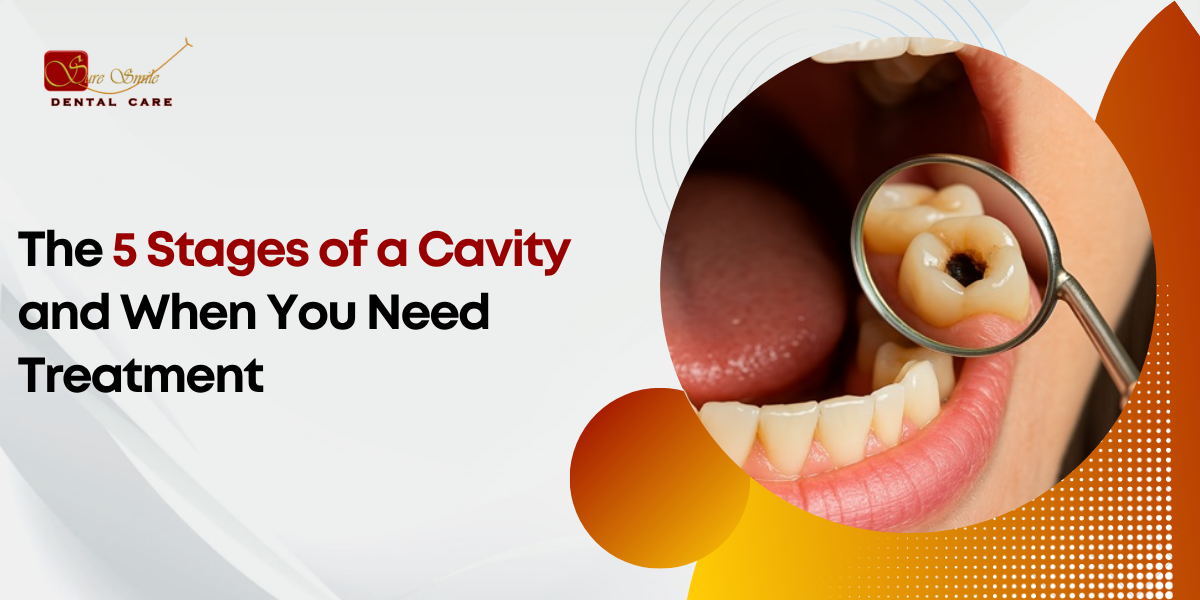
A cavity rarely appears overnight. What starts as a minor chemical reaction on your tooth can easily turn into a painful infection if you leave it alone. The challenge is that the earliest damage often causes no pain at all.
That is why understanding your cavity stages matters. The earlier tooth decay is identified, the greater the opportunity to protect the natural tooth with simpler treatment. Many people wait until they have a toothache. Unfortunately, pain is often a sign that decay has already moved beyond the earliest phase. By then, treatment may be more extensive than it would have been months earlier.
From early warning signs to serious pain, here’s how cavity stages unfold, and when you need professional help.
Stage 1: Plaque Buildup and Acid Attacks
The journey toward a cavity usually starts with plaque.
Plaque is a sticky bacterial film that constantly forms on teeth. When bacteria metabolize sugars and carbohydrates from food and drinks, they produce acids. Therefore, repeated acid exposure can gradually remove minerals from the tooth surface.
This does not automatically mean a cavity has formed. At this point, the process may still be reversible.
The key issue is frequency. Constant snacking on sugary foods or sipping sweetened drinks throughout the day can expose teeth to repeated acid attacks, giving saliva less opportunity to help neutralize acids.
When do you need treatment?
Professional restorative treatment may not be necessary at this stage. However, preventive care becomes important.
Stage 2: Enamel Demineralization
The second of the cavity stages involves early mineral loss from the enamel.
Enamel is the hard outer layer of the tooth. It does not contain nerves, which is one reason early decay can develop silently. A common sign of early demineralization is a chalky or opaque white spot on the tooth.
This form of enamel decay is especially important because early lesions may sometimes be arrested or remineralized before a physical hole develops.
That distinction matters. Once tooth structure is permanently lost and a cavity forms, the tooth cannot rebuild the missing enamel naturally.
Watch for these early cavity signs:
- Chalky white spots
- Changes in tooth surface appearance
- Mild sensitivity in some cases
- Areas where plaque repeatedly accumulates
When do you need treatment?
A dentist should assess suspicious white spots or other changes. Depending on whether the lesion is active and how advanced it is, management may focus on prevention and remineralization rather than drilling and filling.
For a deeper explanation of how decay develops, read our guide on the stages of tooth decay.
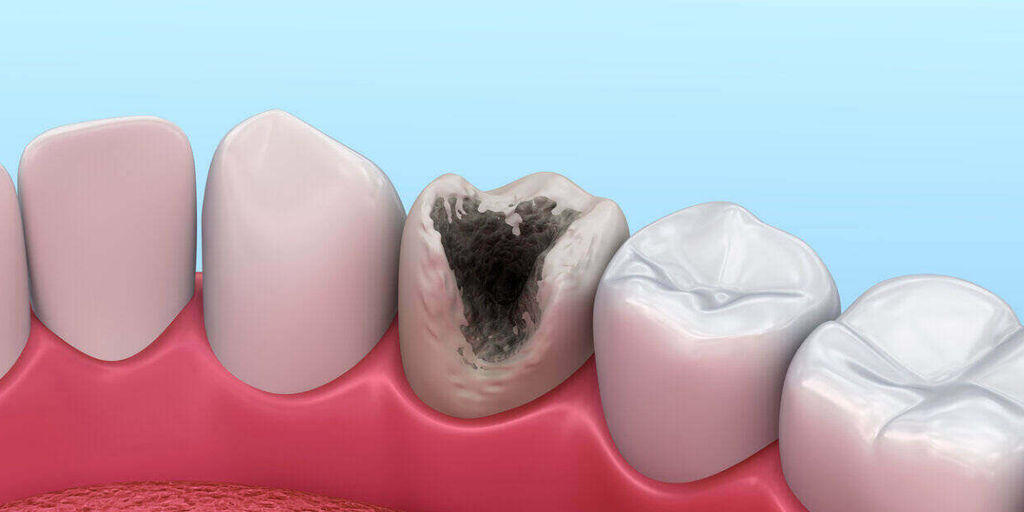
Stage 3: Enamel Breakdown and Early Cavitation
This is where the cavity stages start moving from early chemical damage toward permanent structural loss. Continued acid exposure can weaken enamel until its surface begins to break down. Also, a small cavity or microcavity may develop, but you may still feel absolutely nothing.
That is one of the biggest misconceptions about cavities: no pain does not mean no problem. Because enamel has no nerves, decay can progress quietly before producing noticeable discomfort.
A dentist may detect these areas during a clinical examination and, when appropriate, through dental imaging.
When do you need treatment?
Once there is cavitation or irreversible structural damage, the treatment approach depends on the size, location, and activity of the lesion.
Some very early lesions may be managed conservatively, while established cavities often require restorative treatment. The goal is to remove or manage diseased tooth structure appropriately and restore the tooth before the damage spreads deeper.
This stage is often the best opportunity to prevent a relatively small problem from becoming a dentin cavity.
Stage 4: Decay Reaches the Dentin
Once a cavity reaches stage four, it’s a bigger deal since the decay has broken through the enamel and into the dentin. Dentin is softer and less mineralized than enamel. Once bacteria and decay reach this layer, the cavity progression can accelerate.
This is also when symptoms become more likely.
You may notice:
- Sensitivity to cold drinks
- Discomfort with sweet foods
- Pain when eating
- Food repeatedly getting trapped in one area
- A visible hole or dark spot
A dentin cavity does not always cause severe pain, but it should not be ignored. The tooth now has less protective structure between the decay and the pulp.
When do you need treatment?
Professional treatment is generally needed once decay has reached dentin. A dental filling is commonly used when enough healthy tooth structure remains, and the pulp has not been irreversibly affected.
The longer treatment is delayed, the more tooth structure may be lost.
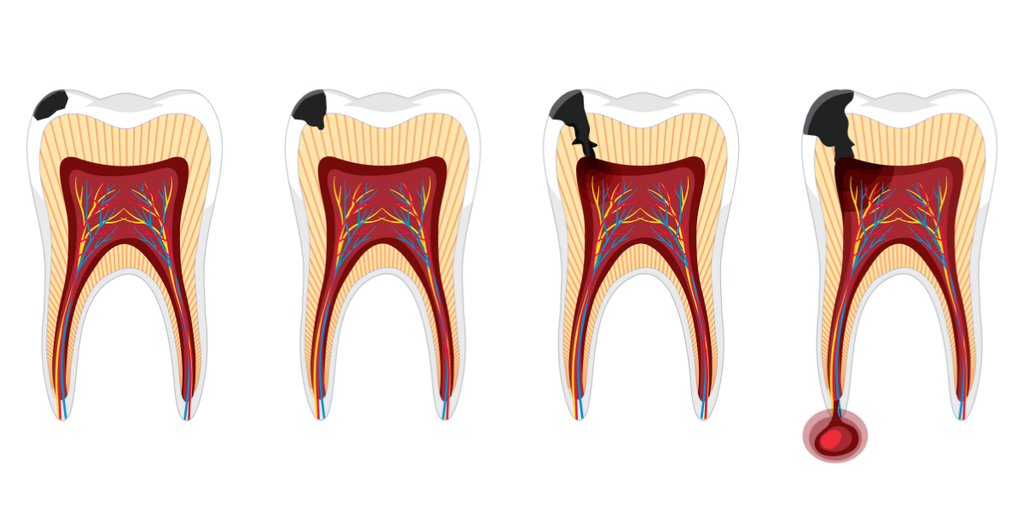
Stage 5: Pulp Involvement and Advanced Tooth Decay
A cavity reaches its final stage once decay hits the pulp, where your tooth’s nerves and blood vessels live.
This is advanced tooth decay, and it can lead to inflammation, infection, severe pain, or an abscess.
Possible symptoms include:
- Persistent or throbbing tooth pain
- Lingering sensitivity to hot or cold
- Pain while chewing
- Swelling near the tooth
- Gum tenderness
- Facial swelling in severe infections
However, symptoms can sometimes change unexpectedly. A tooth that was previously painful may stop hurting if the nerve becomes severely damaged. That does not mean the infection has disappeared.
When do you need treatment?
Prompt dental care is necessary. Depending on the condition of the tooth, treatment may involve root canal therapy and restoration with a filling or crown. If the tooth cannot be saved, extraction may be considered.
Sure Smile Dental Care provides specialized endodontic treatment and root canal care for problems affecting the tooth pulp and surrounding tissues.
The Real Lesson Behind Cavity Progression: Don’t Wait for Pain
Understanding the cavity stages changes the way you think about dental treatment.
The goal should not be to wait until a cavity becomes painful enough. The smarter approach is to identify early cavity signs while treatment is still preventive or minimally invasive.
A simple way to think about the tooth decay stages is this:
Plaque and acid attacks → enamel mineral loss → enamel breakdown → dentin decay → pulp involvement
Every step deeper can mean more complicated treatment.
Therefore, regular dental check-ups are valuable because some cavities develop in places you cannot easily see, including between teeth and inside deep grooves.
Final Thoughts
The five cavity stages show why timing matters so much in dental care. The most important takeaway is simple: a cavity does not need to hurt to need attention.
Therefore, recognizing early changes, maintaining good oral hygiene, limiting frequent sugar exposure, and attending regular dental check-ups can help interrupt the process before it becomes advanced tooth decay.
Schedule your check-up with Sure Smile Dental Care today and protect your smile before small problems become bigger ones.
FAQs
1. What are the five cavity stages?
The five stages generally describe the progression from plaque and acid exposure to enamel demineralization, enamel breakdown, dentin decay, and finally pulp involvement.
2. Can early enamel decay be reversed?
Early enamel demineralization may sometimes be arrested or remineralized with appropriate preventive care. However, enamel that has been permanently lost through cavitation does not naturally grow back.
3. What are the earliest signs of a cavity?
Early cavity signs can include chalky white spots, changes in tooth appearance, sensitivity, or areas where plaque repeatedly accumulates. Some early cavities have no noticeable symptoms.
4. Does every cavity cause pain?
No. Cavities affecting enamel may cause no pain because enamel does not contain nerves. Pain often becomes more likely as decay reaches deeper layers.
5. How quickly does cavity progression happen?
Cavity progression varies from person to person. Diet, oral hygiene, fluoride exposure, saliva, and individual caries risk can all influence how quickly decay develops.